What is Python?
Python is a programming/scripting language that can be used on many different computers and operating systems, including Windows, Unix, Macintosh, etc.

Python is a programming/scripting language that can be used on many different computers and operating systems, including Windows, Unix, Macintosh, etc.

It’s very straightforward and easy to read and write. It’s now one of the most popular programming languages.

The first and most obvious thing to do is download Python and start playing!
In this part, we are going to explore Django’s authentication system and how to create a profile page for users. So we are going to implement the following pages: sign up, log in, log out, reset password, change password, profile, and finally an edit page. Sign Up Let’s start with the signup view. Open the
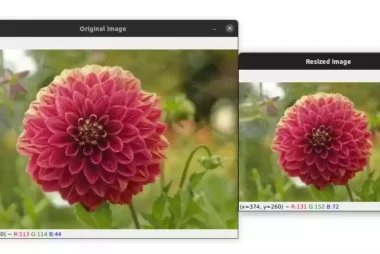
In this tutorial, I will show you how to resize images using OpenCV’s cv2.resize() function. I will also show you how to resize an image by preserving the aspect ratio so that the resized image doesn’t appear distorted. The following image will be used as an example throughout this tutorial: The image has a shape of (400,

Training a deep neural network can take hours or even days to complete. It is not practical to train such a neural network every time you want to make predictions. In this case, you can save and then later reload your model. When you save a model you can save it after training or save checkpoints at regular intervals
This is the second part of the Django blog tutorial series. In this part, we are going to explore the MVT architecture. We will build the home page that lists all the blog posts and a second page that display all the details about a single post. We will continue where we left off in
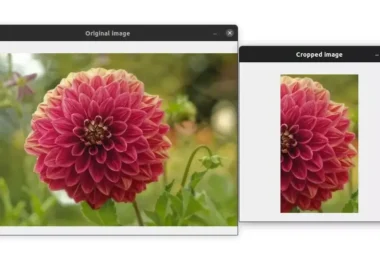
In OpenCV, images are simply Numpy arrays. So we can use Numpy array slicing for image cropping and remove the part we are not interested in. The image below will be used as an example throughout this tutorial. Crop an Image Using OpenCV The first dimension of a Numpy array represents the rows of the array
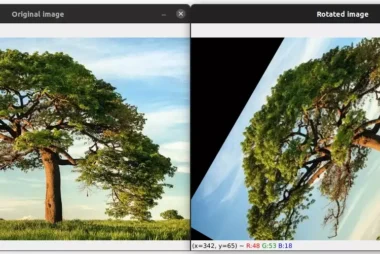
In this tutorial, we will see how to rotate images with OpenCV using some built-in functions. The first one is cv2.getRotationMatrix2D which, as its name suggests, will give us the transformation matrix that we will use to rotate the image. The second function is cv2.warpAffine, this function applies the rotation by using the transformation matrix. Rotate Images with OpenCV
Django provides the contenttypes framework that allows us to create generic relationships between models. This can be useful when you want to implement, for example, a comment system where you can comment on posts, user profiles, images, and even comments themselves. In this tutorial, we will use the ContentType model, GenericForeignKey field, and GenericRelation to implement a comment system where users
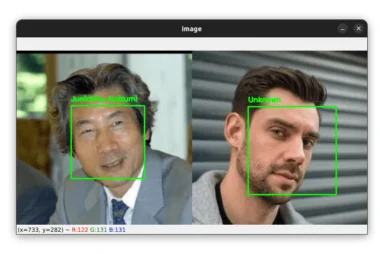
In this tutorial, we will see how to perform face recognition using the Dlib library and deep learning. The OpenCV library will be used for performing some simple image processing tasks such as converting the image to grayscale, resizing it, and so on. We’ll use a pre-trained network provided by Dlib. This network has been
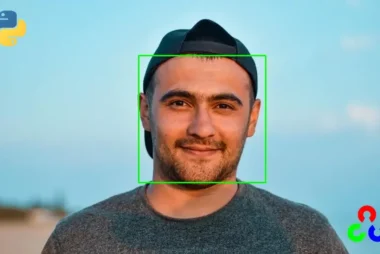
In this tutorial, we are going to see how to detect faces with OpenCV and Haar cascade then we will use image blurring to only blur the part of the face on the image. Face detection is a computer vision technology that consists of detecting human faces in digital images, videos, and real-time video streams.
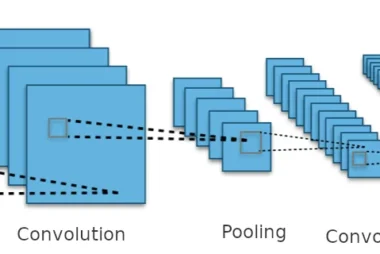
In deep learning, a convolutional neural network is a class of deep neural networks that have been used with great success in computer vision tasks such as image classification, object detection, image segmentation, … Neurons in a convolutional layer are not fully connected to every pixel in the input image like in a traditional neural network.